Service education
Chimney Repair Services
Chimney repair can involve masonry, crowns, caps, flashing, liners or water management. A strong proposal connects a documented condition to a specific method.
Compare service companies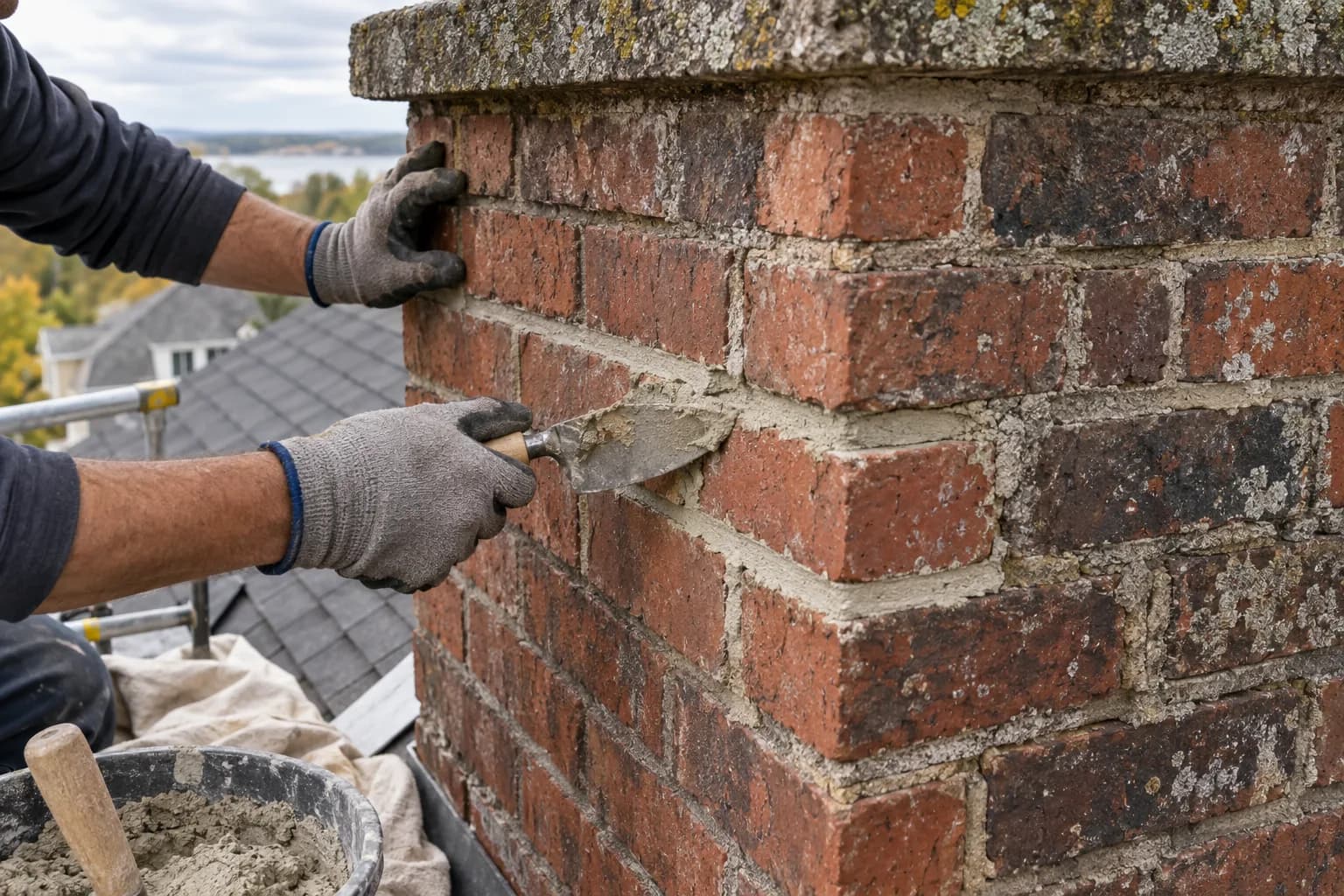
A clear service scope
What a useful proposal should address
- Identify the condition and likely cause
- Define repair area, preparation and materials
- Explain access, protection and cleanup
- State exclusions and written warranty terms
Contractor interview
Questions to ask every company
- What evidence supports this repair recommendation?
- Are materials compatible with the existing system?
- What is excluded from the price and warranty?
Identify the component before choosing the repair
A chimney repair quote might describe crown rebuilding, roof flashing work, liner repairs or masonry work. These require different materials, access and expertise. Ask the contractor to identify the affected component and explain the evidence behind the recommendation.
For recurring moisture, start with leak diagnosis before purchasing a product. Compare the repair boundary, preparation, material compatibility, protection and written warranty. A water-repellent treatment is not a universal substitute for repairing an identified defect.
Price is meaningful only when the scope matches
Two chimney service estimates can differ because they describe different access, inspection, cleaning, material, protection or documentation. Ask each contractor to respond to the same property brief, then compare the written inclusions and exclusions line by line.
Profiles in this directory may contain recorded services and business details. They do not establish that a company is suitable for a specific property. Verify current qualifications, insurance, availability and the final scope directly.
The Advisor field map
One chimney. Several different work scopes.
Point to the component before comparing the proposal. This simplified masonry-fireplace illustration is a navigation aid—not a construction drawing or a model of every chimney system.
- 01At the openingCap compatibility and mounting →
- 02At the masonry topCrown repair or rebuilding →
- 03At the roof junctionFlashing and adjoining roof work →
- 04Inside the passageLiner condition and repair scope →
- 05Along the exhaust routeInspection, access and limitations →
- 06At the applianceFuel- and model-specific maintenance →
Not sure which component is involved? Start with inspection scope or leak investigation, not a guessed repair.
The Advisor standard · Define before deciding
Do not buy a repair before you understand the finding
A repair conversation should start with an identified component: brickwork, mortar, crown, flashing, cap, liner or appliance connection. Ask the contractor to show where the issue is and explain what supports the proposed response. Exterior water staining and an internal liner defect may need completely different investigations and trades.
What a comparable proposal looks like
Ask for the repair boundary in measurable terms rather than ‘fix chimney.’ On masonry work, that could mean which faces or courses are included; on flashing, which roof interfaces are being addressed. This is not a request to design the repair yourself. It gives a second professional enough information to explain whether a competing quote describes the same work.
Four items to take away
- Component and extent of work
- Preparation and named materials
- Roof or interior protection
- Completion evidence and warranty exclusions
What if two repair recommendations conflict?
Ask both professionals to identify the evidence, limitations and assumptions behind their recommendations. For substantial work, an appropriately qualified independent assessment can help clarify the unresolved question. Do not operate a system with unresolved safety concerns while comparing opinions.
Original homeowner comparison checklist, not a technical specification. For maintenance and inspection background, see CSIA homeowner resources. Follow the applicable appliance instructions and on-site findings. How this guidance is produced.
Homeowner questions
Frequently asked questions
Clear answers for planning a safer, more comparable contractor search.
How often should a chimney be inspected?
A widely used rule of thumb is an annual inspection for chimneys, fireplaces and vents, with cleaning performed when deposits or obstructions warrant it. Actual timing depends on the appliance, fuel, use, system condition and the professional's findings.
Is a chimney inspection the same as a chimney sweep?
No. Sweeping is a cleaning service; inspection is an assessment of accessible system components and conditions. A visit may include both, but the proposal should say which inspection level and cleaning work are included.
What should a chimney sweep quote include?
Ask for the service type, inspection level, areas included, dust-control method, access assumptions, documentation, possible add-ons, taxes and any conditions that could change the price.
How do I compare chimney sweep companies?
Give each contractor the same property and symptom description. Then compare current credentials, insurance evidence, inspection process, written scope, exclusions, cleanup, photos or report, price and warranty rather than comparing totals alone.
What are warning signs that need prompt attention?
Stop using the appliance and seek qualified help for smoke entering rooms, a suspected chimney fire, carbon-monoxide alarms, loose masonry, strong persistent odors, water intrusion or visible damage. Call emergency services for an active fire or immediate danger.