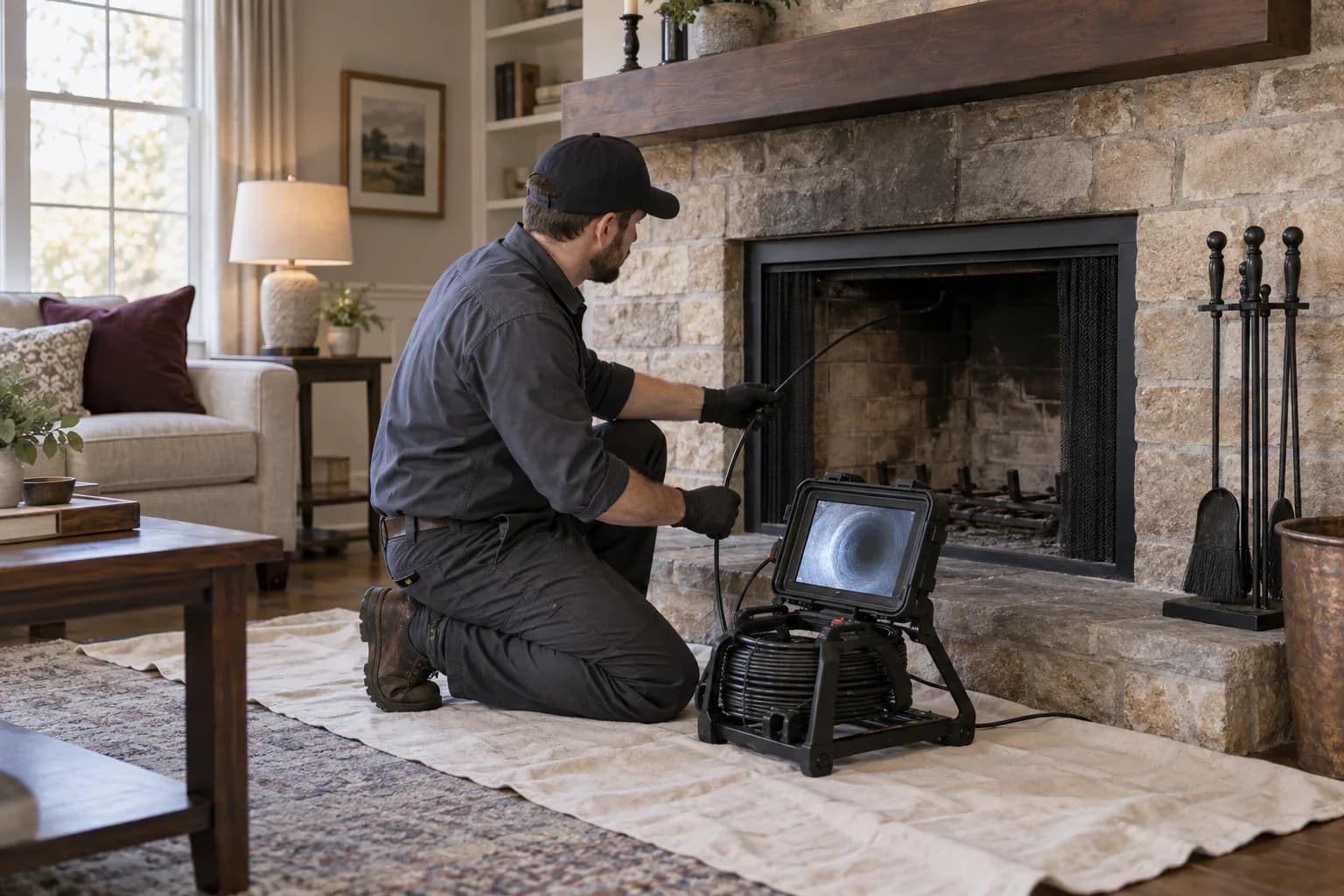
Identify what was actually examined
Begin with the property, visit date, appliance and flue identifiers. A house with multiple fireplaces may not have had every system examined. Match the report to the written appointment scope and check the stated inspection level. An invoice labeled chimney service may describe less than the report you expected.
Look for a description of accessible areas and any limitation caused by roof conditions, locked spaces or concealed construction. An area not examined should not be silently treated as satisfactory. Ask the inspector to explain the effect of each limitation on the conclusions and whether another visit or different access is recommended.
Separate a finding from a proposed solution
A useful finding names a component and describes the condition observed. A recommendation explains the next action. They are related but not identical. For example, a photograph of damaged material does not alone establish the full repair boundary, the cause of deterioration or the suitability of a particular replacement product.
Ask for the connection in plain language: what was seen, why it matters and how the proposed step addresses it. A professional may reasonably need more investigation before recommending a final repair. An honest statement of uncertainty is more useful than treating every image as conclusive proof of a single cause.
Read photographs in context
Check whether photographs identify the appliance, flue or exterior location. Ask what orientation and scale you are looking at. Camera images can be difficult for a homeowner to interpret; a caption and an explanation are more useful than an unlabeled collection of close-ups. Do not attempt to diagnose liner condition from an image alone.
Keep original files where provided and associate them with the report date. Before-and-after views may help document work, but different angles can make comparisons difficult. Ask the company how its completion record demonstrates that the specified work was performed and which limitations still remain.
Clarify urgency without inventing a deadline
Ask the inspector which findings affect continued use and what should happen before the appliance operates again. A general list of recommended work may mix immediate concerns with maintenance planning. Request that those categories be explained in writing instead of assuming every item has the same urgency.
If two professionals disagree, provide both with the same records and ask what evidence supports each conclusion. A second opinion can be useful for a substantial repair, but it does not authorize operating a system with unresolved concerns. Emergency symptoms belong with emergency responders, not in an email discussion about report wording.
Use the report to define the next contract
A report is not necessarily a repair contract. The proposal should separately state the work area, preparation, materials, access, exclusions, cleanup and payment terms. Ask whether concealed damage can change the price and how additional work will be approved. Keep investigation fees separate from optional repair authorizations.
Bring the scope into the Quote Comparison Lab, noting unknown answers rather than guessing that an item is included. After completion, retain the report, agreed changes, invoice, product information and warranty together. The next professional should be able to see what was found, what was done and what remains unresolved without reconstructing the history from memory.
Sources and scope
Hiring questions and worksheets are original editorial guidance. For technical background, consult the sources below, your appliance manual and a qualified on-site professional. This article has not been represented as a professional inspection or expert-reviewed report.
- CSIA homeowner resources — Inspection, maintenance and cleaning background.
- EPA Burn Wise: best wood-burning practices — Archived educational resource; the program stopped updating in October 2025.