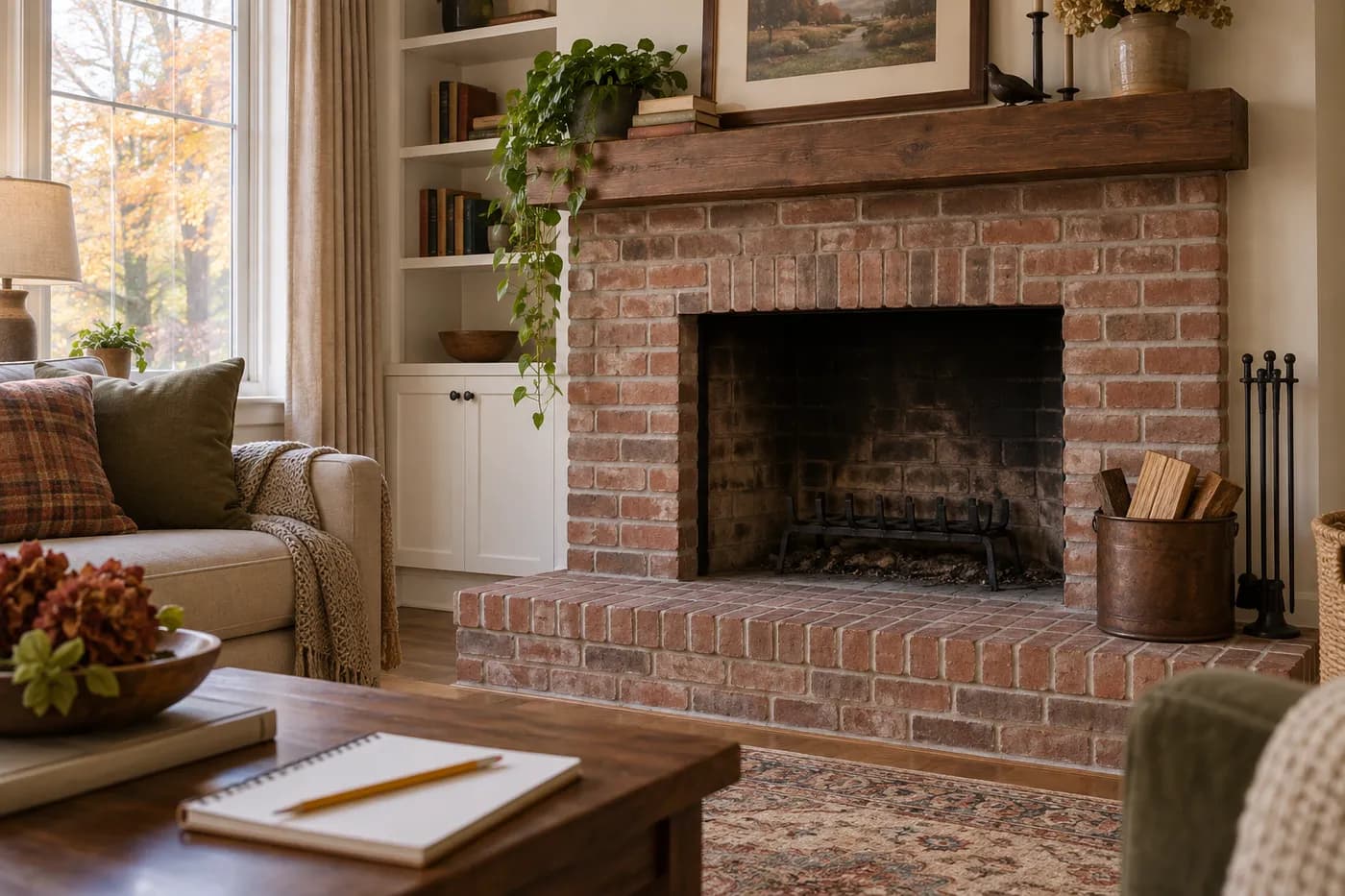
Start with the unknowns, not a test fire
An unused fireplace can look tidy while its venting history remains unknown. Years without a fire do not establish that the passage is clear, the system is unchanged or the connected appliance is appropriate. Treat the absence of records as a question for an inspector, not evidence that the system is either safe or beyond repair.
Before contacting a professional, write down what you actually know: how long you have owned the property, whether anyone remembers prior use, and whether there are old reports or invoices. Identify each fireplace or stove separately. Do not light a small fire to see what happens, and do not reach into an unseen passage to investigate debris.
Recover the system's paper trail
Look for appliance model information that can be read without dismantling anything. Gather the manufacturer's manual if available and photographs from ordinary standing positions. Record any visible water staining, loose material or unusual odor. Keep observations separate from explanations: a damp mark is useful evidence, but it is not proof of a failed crown.
Ask a previous owner or property manager for service records and information about alterations. A decorative conversion, replacement insert or disconnected appliance could matter to the assessment. If nothing is available, say so directly. An inspector can account for uncertainty more effectively than for a confident but unverified history.
Book an assessment with an explicit scope
Describe the idle period and missing history before asking which inspection level is appropriate. Ask whether the company handles this appliance type, which areas require access and what written report you will receive. The level should follow the circumstances and findings; it is not chosen simply by selecting the cheapest appointment name.
Cleaning, inspection and repair should be identifiable in the proposal. If cleaning is needed to examine the system, ask how that is authorized and priced. If a concern cannot be evaluated without broader access, request an explanation before agreeing to opening concealed construction. Do not assume an inspection fee includes every possible follow-up.
Turn the findings into a sequence
Read the report for identified components, observed conditions, inaccessible areas and recommendations. Ask which unresolved issues must be addressed before use. A list of suggested improvements is easier to act on when the contractor distinguishes required corrective work, further investigation and optional changes.
Where repair proposals differ, compare the evidence behind them. Ask each professional to explain how the proposed work addresses the documented condition. Save the agreed scope, approved changes, photographs and completion record. A verbal reassurance without a traceable report is difficult to use at the next appointment or property sale.
Prepare for ongoing ownership
After qualified assessment and any necessary work, follow the actual appliance instructions and the professional's advice about operation and maintenance. Do not transfer operating habits from another fireplace or fuel type. Locate smoke and carbon-monoxide alarm guidance from the relevant safety authorities and follow the alarm manufacturer's instructions.
Keep the new baseline report in your Chimney Passport with the next recommended review date. CSIA's homeowner guidance supports regular inspection even when use is limited; cleaning depends on condition and need. If a CO alarm sounds or there is immediate danger, get outside and call 911. Directory research and routine appointment booking come after emergency response.
Sources and scope
Hiring questions and worksheets are original editorial guidance. For technical background, consult the sources below, your appliance manual and a qualified on-site professional. This article has not been represented as a professional inspection or expert-reviewed report.
- CSIA homeowner resources — Inspection, maintenance and cleaning background.
- EPA Burn Wise: best wood-burning practices — Archived educational resource; the program stopped updating in October 2025.